
How I'm Approaching Design in 2026
A personal lens on what I'm noticing and what I'm choosing to do about it
Design has undergone significant changes since I began some 4 years back, but 2025 was the year when I saw the most noticeable shift in how we work and how we build things. It's not that I didn't expect AI to become part of the workflow, but what I did not expect was for it to happen this fast and how it would reshape our understanding and workings this broadly. Now it is here, and whether we like it or not, it is shaping the craft.
In past years, my approach regarding design was fairly consistent. I would try to do more research, refine my process, and learn new methods by watching how other teams work. That still matters. But 2026 feels different for one simple reason.
I cannot think and iterate faster than an AI.
So instead of trying to compete on speed, I want to focus on the parts of design that feel more durable: judgment, clarity, craft, and making ideas tangible enough that teams can move with confidence.
I've pinpointed some focus areas that I'm carrying and focusing on for 2026 based on what I'm seeing in the industry and what I'm experiencing firsthand in real projects.
1. Bring AI inside the process, not around it.
What I'm seeing is that AI is no longer a "tool you use before or after design." It is becoming something you can use during discovery, exploration, documentation, and decision-making.
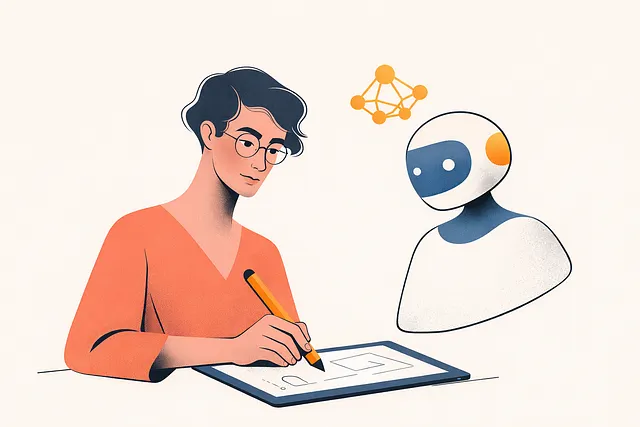
My focus is to integrate AI into the design process itself, as a collaborator that helps me explore faster and clarify faster. The goal is not to generate more output. The goal is to reduce wasted time in the messy middle: the searching, the re-explaining, the back-and-forth that happens because the model in our head is not shared.
AI can accelerate the exploration. The responsibility still stays with me to choose what is true, what is useful, and what fits reality.
2. Double down on craft, taste, and clarity
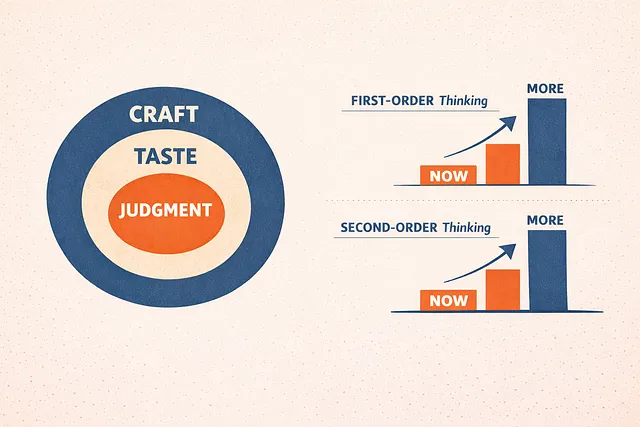
If iteration is cheap, then judgment becomes the differentiator.
Focusing more on the creative and visual side of the craft and the overall "feel" of an experience. Not as decoration; as communication. I also want to rely more on first and second-order thinking. First order is what works right now. The second order is what this decision creates later: rigidity, edge cases, operational burden, and long-term maintenance. This is the part no tool can do for you without context. If anything, the faster we build, the more important it becomes to think about downstream cost.
3. Prototype more, and use prototypes as the shared language
Static screens are often not enough, especially for complex products. What matters is behaviour; what happens when something fails, what happens when a user takes an unexpected path, what happens when the real world does not match the ideal flow.
My focus is on prototyping more, not only for polish, but also to convey the model clearly. A prototype becomes a shared object that the team can react to. It also surfaces gaps earlier than discussions do.
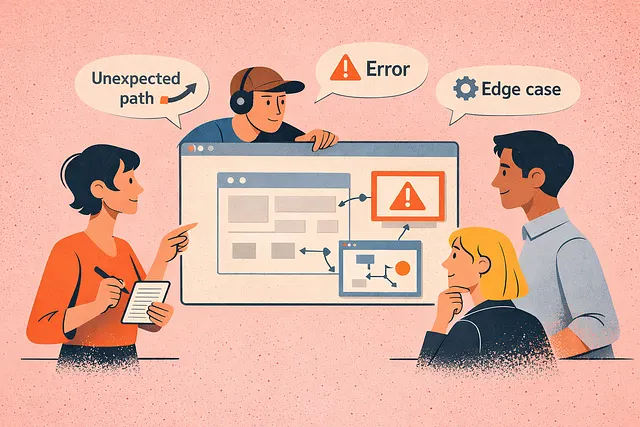
This also changes how I see alignment. Instead of explaining designs repeatedly, I want the artefact to do more of the explanation.
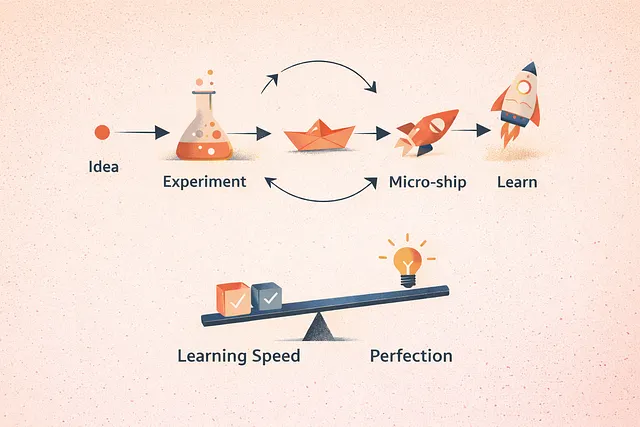
4. More experiments, more micro-ships, less fear of imperfect first versions
We saw, and we will see more micro products and passion projects in 2026. It is getting easier to build and publish. As that grows, the worry of clean code and perfect structure will reduce in the earliest stage, because learning speed becomes more valuable than perfection.
My focus is to do more experiments. Not for the sake of shipping random things, but because small experiments create clarity. They force decisions. They reveal what matters. They also make writing easier, because you are documenting real attempts, not abstract opinions.
5. Go deeper across domains
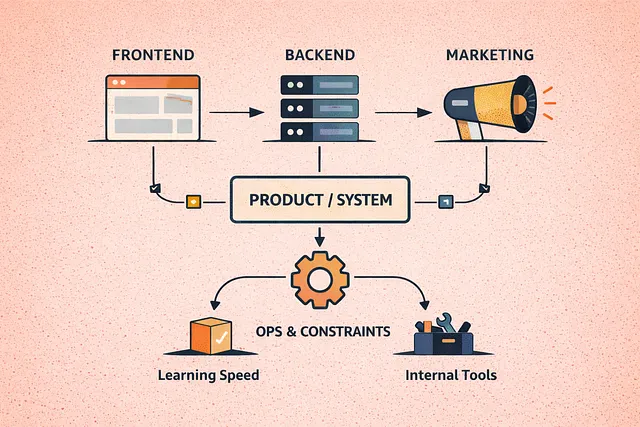
Designers will increasingly touch front-end, back-end, and even marketing, not because everyone must become everything, but because the work is connected. Understanding how other teams operate changes what you design and how you design it.
My focus is to delve more intentionally into other domains. I want to understand how systems are built and maintained; how data moves; how constraints show up in engineering and operations; and how products get adopted in the real world. This will also lead to more internal tools and processes; teams will build what they need to work better.
Closing
This is not a manifesto. It is simply the lens I want to use this year.
2025 made the shift feel real. In 2026, I aim to respond with intention, not by trying to outrun the tools, but by strengthening the aspects of the craft that make design meaningful and usable in the world.